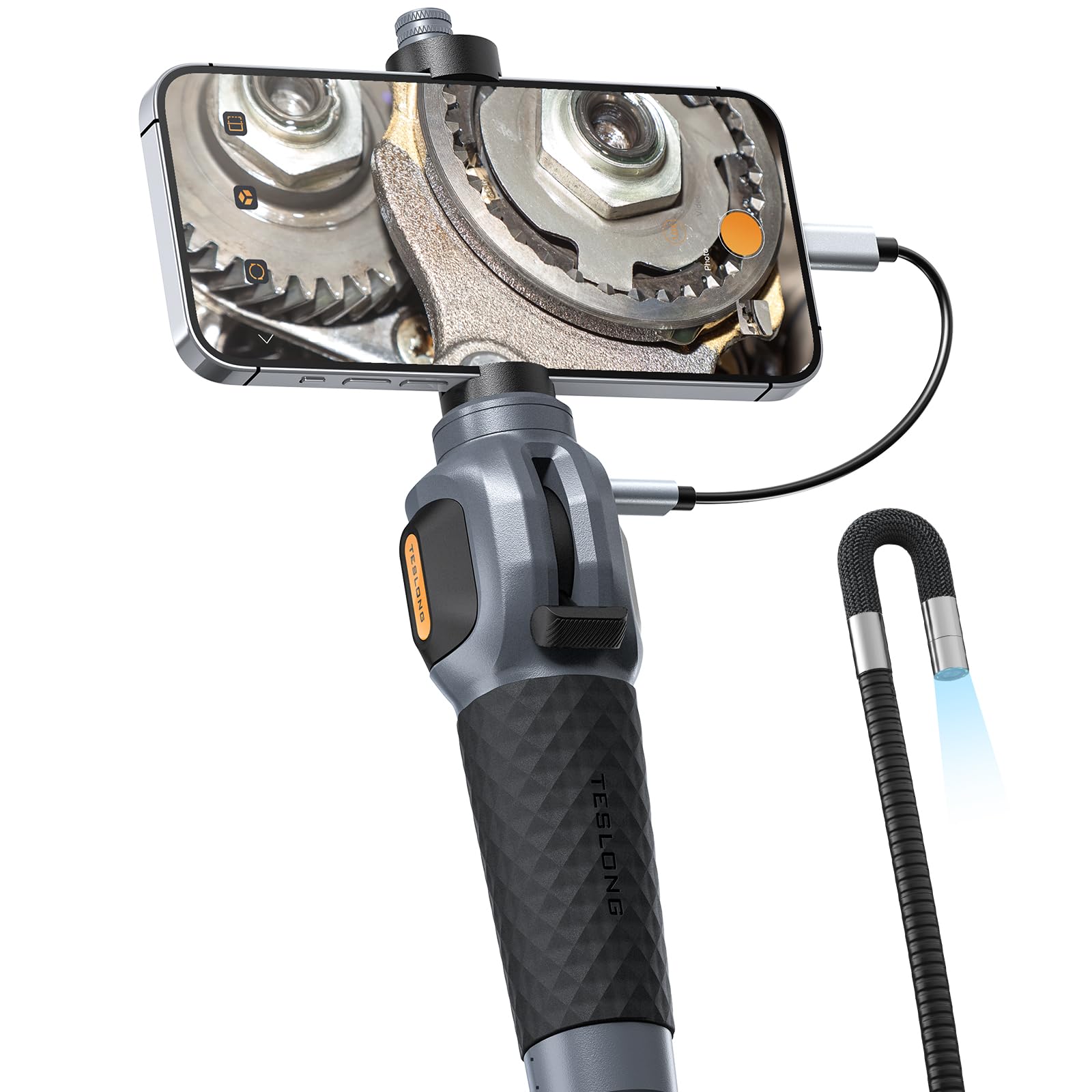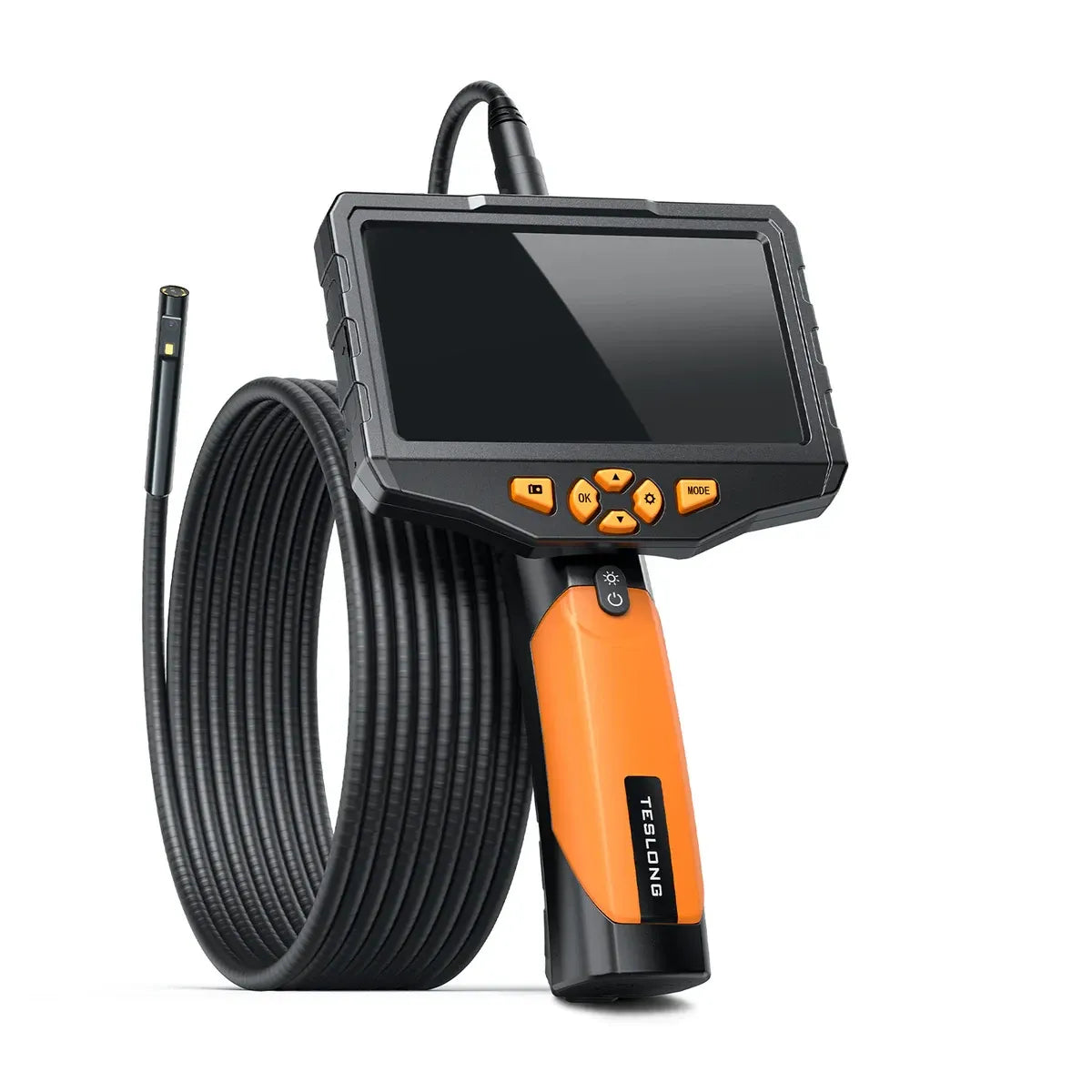
Use a known safe access point, expect insulation and framing to restrict the view, and treat the result as a local observation rather than a complete wall survey.
Choose access before choosing the camera
Start with an existing, verified access point where possible. A camera does not establish that it is safe to make a new hole. Identify hidden electrical cables, water pipes and other services before any invasive work; use an appropriate professional when their location or the wall construction is uncertain.
The relevant fit is the largest part of the assembled probe, including the shoulder and attachments. Clearance immediately behind the opening can matter as much as diameter. A small head may enter but point straight into insulation or a nearby surface, leaving no useful view.
An empty cavity is a limited test
Bob Vila includes an uninsulated wall in its four-scenario borescope comparison. That gives useful evidence of handling in that particular space, but does not establish performance in insulated walls, packed cavities or every UK wall construction.
Decide what you need to locate: a fixing, a visible pipe, the edge of a timber or an obstruction. A fixed side lens can help inspect a nearby surface; an articulating head may help aim around an edge if there is space. Neither provides a view through material that blocks the lens.
Cable control changes the result
A floppy cable can be difficult to aim across an open void. A shape-holding cable can help place a head but may be awkward around obstructions. Digital Camera World found the Bosch UniversalInspect's short, shape-holding cable useful when looking beneath a bathroom basin at a loose tap.
That is a specific close-access use case, not a guarantee that a similar cable will cross an entire wall bay. Ask whether a review shows the head being positioned in an open cavity, rather than only slid along a supporting surface.
Keep the finding local and recoverable
Retain a photograph of the access point and note the direction of the probe. Without this context, a close-up inside a cavity can be difficult to relate to the room. Record what is visible and where the view stops; an unseen leak or cable is not evidence that it is absent.
Withdraw slowly and stop if the head or an accessory catches. The Gadgeteer's WiFi borescope review describes a shoulder snag on withdrawal. Avoid loose attachments in inaccessible spaces, and follow the device instructions rather than using the cable as a pulling tool.
Sources & further reading
These are external published reviews or specialist guidance. Their observations are attributed; they are not our own physical tests. Source availability and hardware may change.