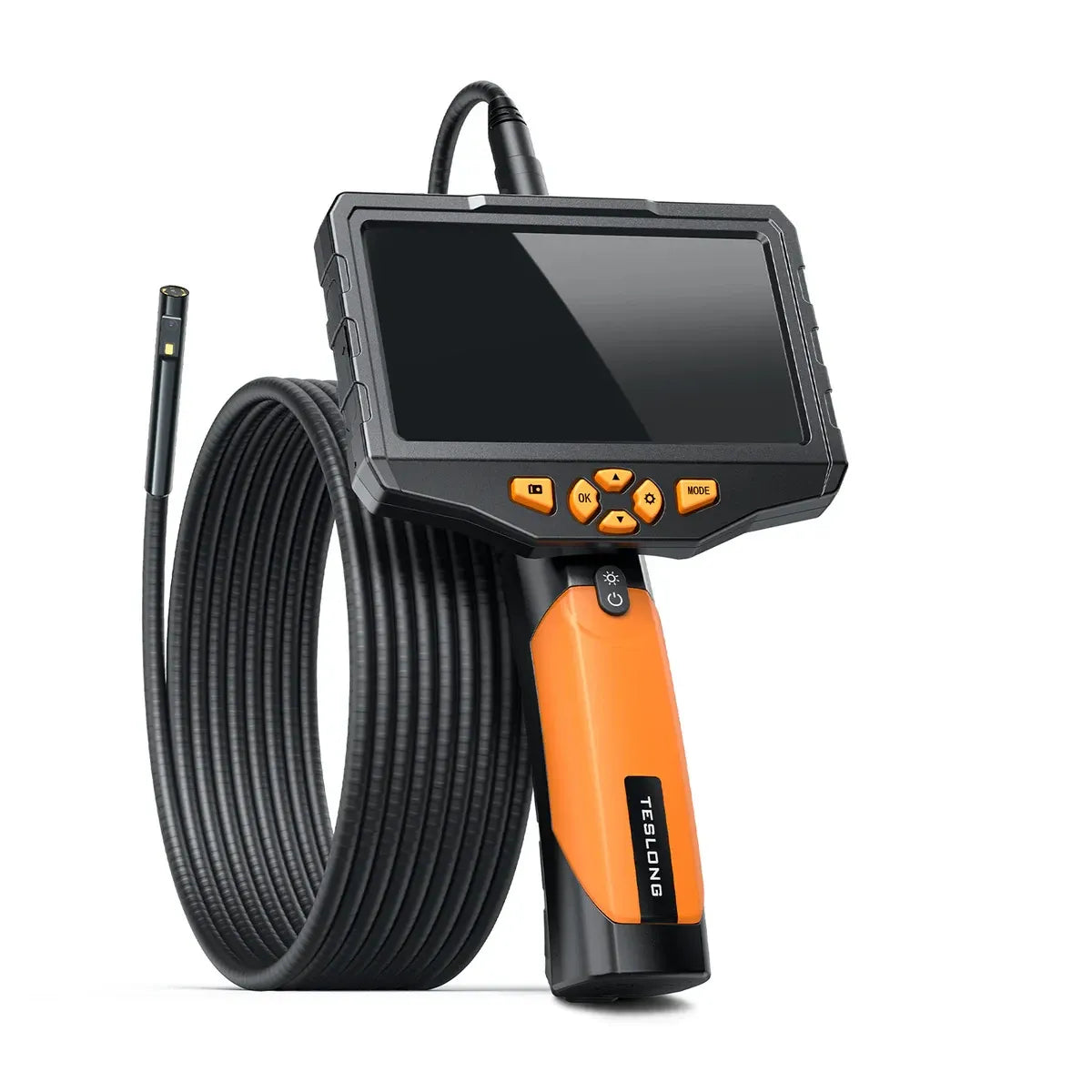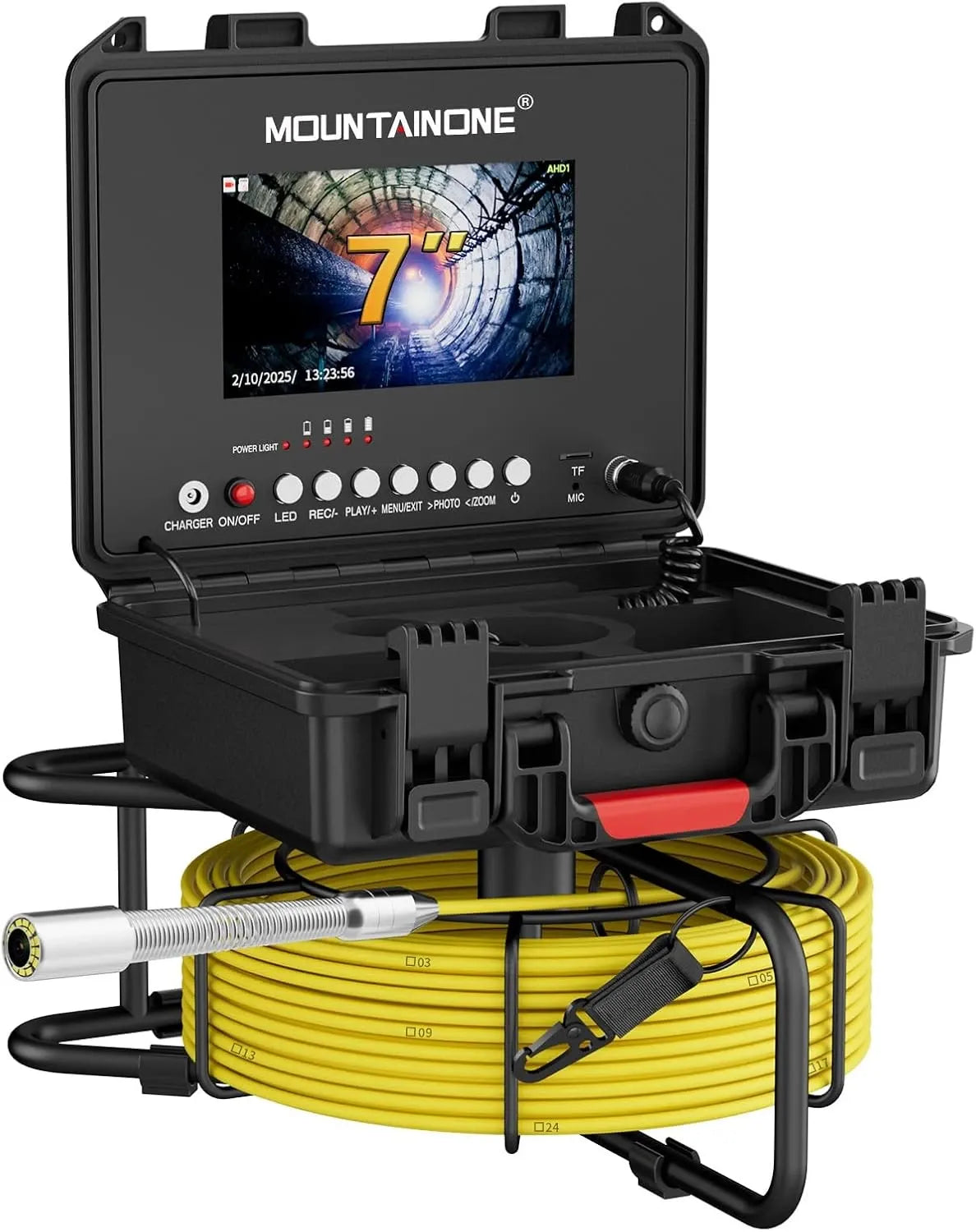
Choose a short probe for local, recoverable inspection. For a drainage run, establish actual reach, visibility, distance records and the reporting needs before comparing systems.
Define the inspection you need
If the task is to look at a visible, accessible obstruction near an appliance, a short inspection camera may provide a useful local view. If the task is to follow a buried drainage run, locate a defect and provide evidence for repair or a property decision, the equipment and reporting requirements are broader.
AJS Environmental's UK report guide describes survey runs, pipe dimensions and material, direction, distance, defects and next actions. That workflow is different from saving a close-up without knowing where it was taken. AJS is a drain service provider, so its guide informs the service context rather than independently comparing cameras.
A long cable does not establish coverage
A push-rod system offers an assembly intended to be fed along a pipe, but its actual reach depends on the route, head, rod and conditions. Ask what distance information is available and how it is recorded. If a system has a distance counter or locating transmitter, confirm that the exact model includes it; do not infer either from the screen or reel.
HighTechDad could not find the advertised metre markings on its reviewed Sanyipace sample and stopped when debris prevented further progress. The author had not tested the main sewer line. Those limits should stay attached to the review rather than being replaced by the full reel length in a recommendation.
Waterproof and usable are different checks
Check the manufacturer's rating for the specific parts and stated conditions. A rated head does not mean the display or connections can be immersed, nor that the system is approved for every liquid, chemical or temperature. Follow the cleaning and handling instructions for the exact equipment.
An intact waterproof head can still produce an unusable image when mud covers the lens or lights, as HighTechDad's test illustrates. On wet or shiny pipe surfaces, lighting can also overwhelm detail. Visibility and coverage should be recorded separately from the equipment's advertised protection rating.
Know when a professional survey is the better fit
A DIY recording is not automatically a survey that a buyer, insurer or repair contractor will accept. Establish who needs the result and what they require before purchasing equipment. A useful professional brief identifies the access points, line to be inspected, concern, required deliverables and any known limitations.
Seek professional help when there is no safe access, repeated obstruction, an uncertain buried route or a need for a formal report. Do not enter an inspection chamber to operate a camera. Keep any incomplete view explicit: an uninspected section remains unknown, even when the visible part appears clear.
Sources & further reading
These are external published reviews or specialist guidance. Their observations are attributed; they are not our own physical tests. Source availability and hardware may change.