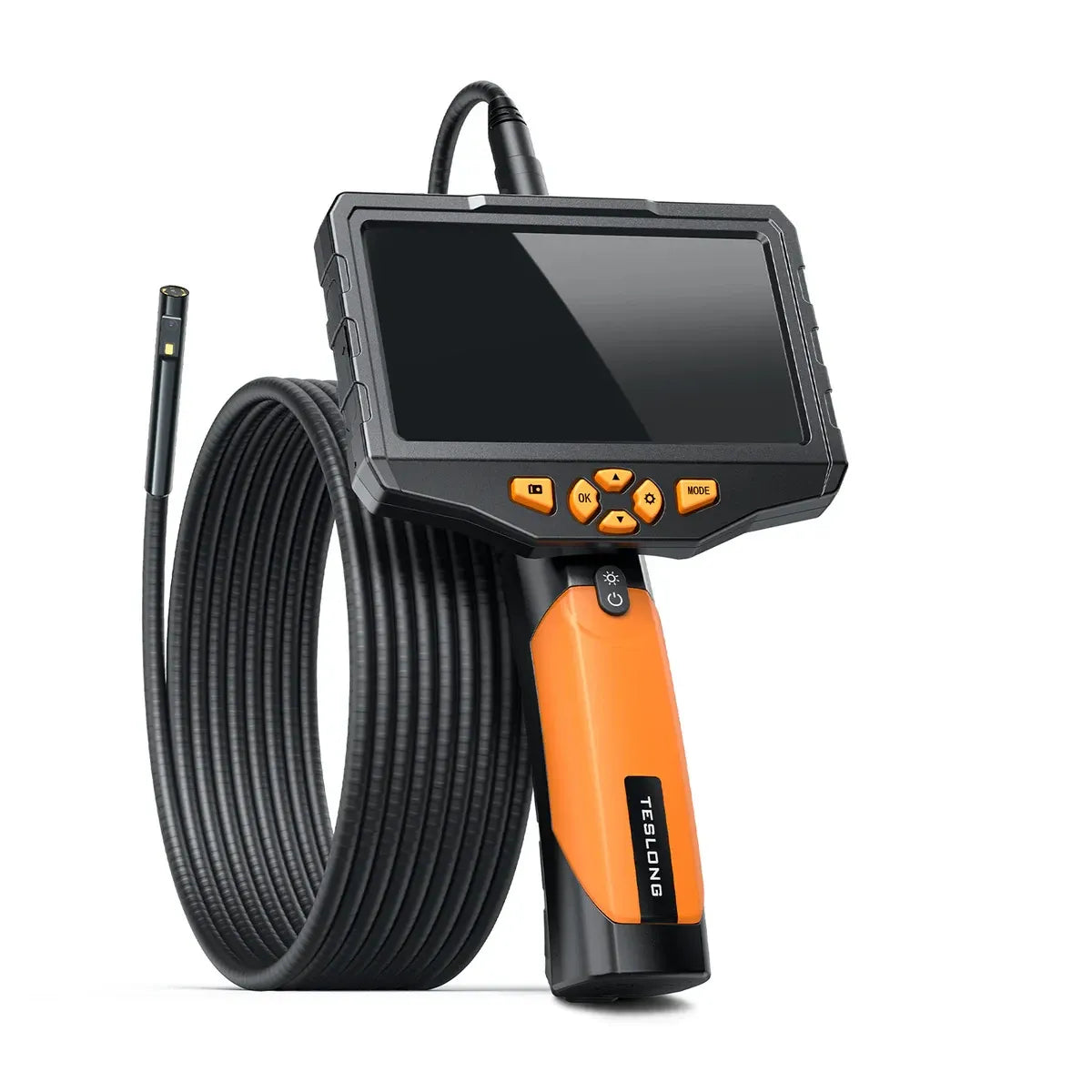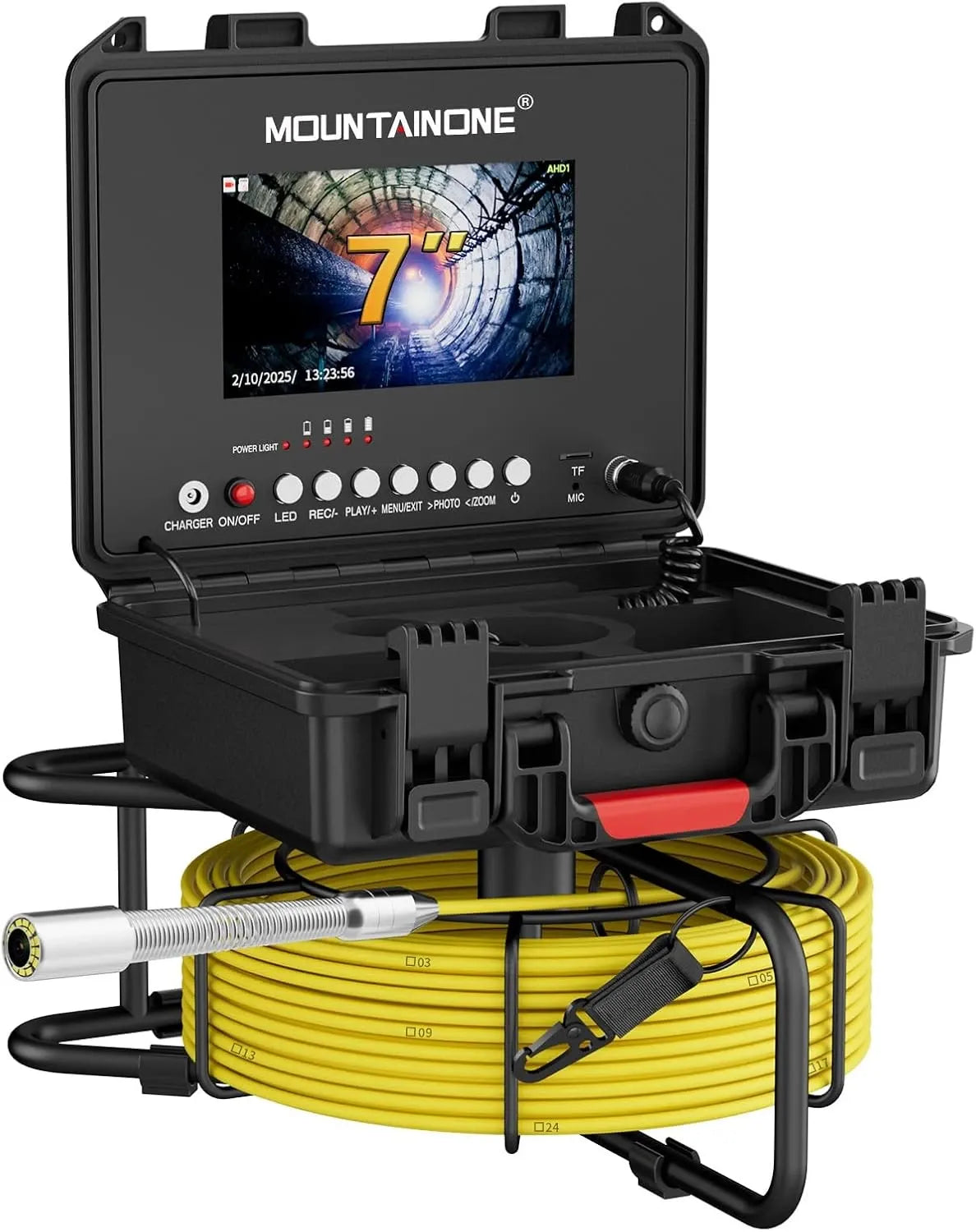
Ask for a documented route, actual internal dimensions and successful retrieval. A small head or long reel does not establish bend performance.
A trap is a route, not just an opening
The outside size printed on a pipe is not a complete description of the passage available to a camera. Internal clearance, fittings, deposits and the bend geometry affect the route. The head's rigid length and the transition to the cable can prevent travel even when its diameter fits a straight section.
Bob Vila reports that a 17 mm Ridgid camera could not negotiate the shower P-trap used in its comparison. That is useful evidence of a particular failure. It does not establish a universal pass or fail diameter for every trap, nor a guarantee that a smaller camera will pass yours.
Separate waste pipes from main drains
A basin waste pipe, a shower trap and an outdoor drain have different access and handling demands. Common UK nominal sizes such as 32, 40, 50 and 110 mm help identify the type of system, but they are not measured internal clearances for a particular fitting.
Before buying, identify the accessible starting point and the likely bends beyond it. A rodding point or inspection chamber may offer a different route from the appliance outlet. If safe access is uncertain or the line is obstructed, consult a drain professional rather than forcing the camera through a convenient opening.
Push distance needs a route attached
HighTechDad's Sanyipace sewer-camera review describes a test under a concrete foundation that ended at dirt and debris. Mud obscured the lens and lights. The author had not tested the main sewer line, and did not provide enough pipe dimensions or bend geometry to reproduce a claimed bend capability.
Treat that review as evidence of contamination and a real stopping point. A 30 m or 100-foot reel label is not a completed 30 m inspection. Ask how far the head actually travelled, how the distance was established and whether it could be recovered without difficulty.
What a useful bend demonstration includes
Look for the complete assembly being used in a visible test route. Record the measured internal diameter, bend shape, number of bends, their orientation, fitted accessories and achieved distance. Successful withdrawal is part of the result, not an optional final shot.
If comparing devices, repeat the same route and include failures. A suggested test separates straight pipe, a single bend and successive bends; it does not imply that we have run those trials. Keep the pipe conditions clear: a clean demonstration should not be presented as proof of performance through sludge or debris.
- Know the entry point and likely route.
- Assess rigid head length as well as maximum diameter.
- Confirm the tested accessories match the supplied assembly.
- Check achieved distance and image visibility.
- Stop at resistance; never use the probe as a clearing rod.
Sources & further reading
These are external published reviews or specialist guidance. Their observations are attributed; they are not our own physical tests. Source availability and hardware may change.